
Mass Migrant Crossing into Spanish Enclave of Ceuta Sparks European Political Fallout
Thousands of Moroccan migrants have crossed into the Spanish enclave of Ceuta, triggering severe European political fallout and border tensions. Spanish authorities report that dozens have died attempting the journey as surrounding nations react.
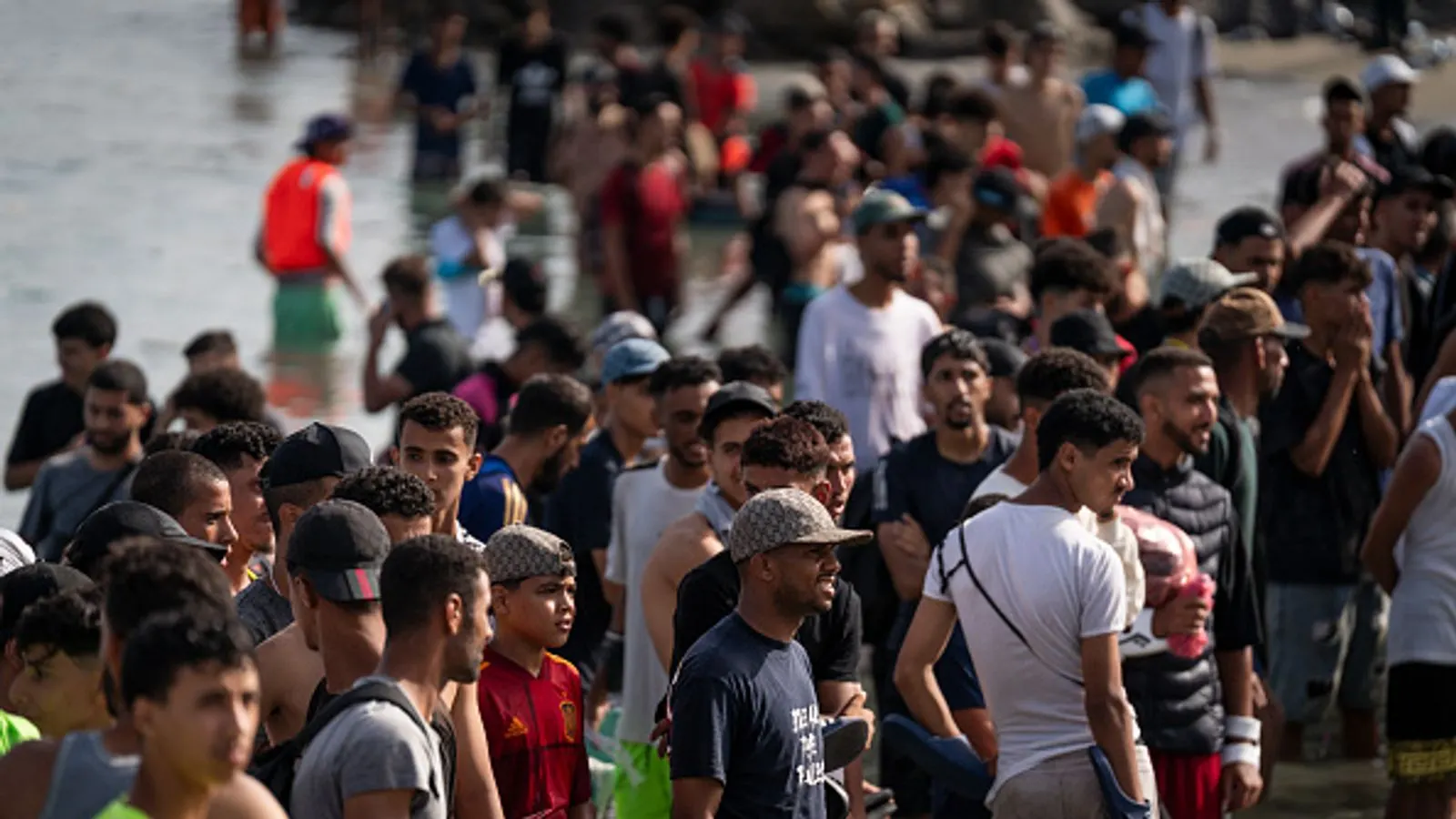
On August 1, 2026, a mass migrant crossing into the Spanish enclave of Ceuta from Morocco triggered significant European political fallout. Ceuta and Melilla form the European Union's only land border with Africa, making them frequent focal points for migration and geopolitical tension between North Africa and the European continent.
According to official reports, thousands of Moroccan migrants made the crossing into the Spanish enclave. Estimates indicate that roughly 60,000 people crossed into Ceuta during the event. Among this large population of arrivals, Spanish authorities documented that around 8,000 of those who crossed were children.
Amid the ongoing crisis and subsequent returns, Spanish authorities stated that around 48,000 of the estimated 60,000 individuals who originally crossed the border had successfully returned to Morocco. However, the perilous nature of the journey resulted in severe human loss, with at least 67 people believed to have died attempting to reach the enclave.
The massive influx into Spanish territory quickly generated broader diplomatic and security concerns across the European Union. In direct response to the situation at the border, France stated that it would increase checks along its border with Spain. Simultaneously, Italy threatened to suspend Spain from the Schengen free-travel area over the handling of the border arrivals.
The situation in Ceuta has also reverberated across wider international political commentary. Figures including Andrej Babiš, Pedro Sánchez, Ursula von der Leyen, Donald Trump, Husam Zomlot, Avi Shlaim, Gideon Levy, and Jeremy Corbyn have been linked to the broader discourses surrounding European security, immigration policy, and international relations involving organizations such as the European Commission, Italy, France, Finland, Denmark, the Czech Republic, Israel, and the United States.