Kushtia housewife achieves success cultivating BARI-Panikachu-1 taro stolons
Shirina Khatun has found agricultural success by cultivating the BARI-Panikachu-1 variety on 20 decimal of land in Kushtia. Supported by the local agriculture office, she expects significant earnings this season.
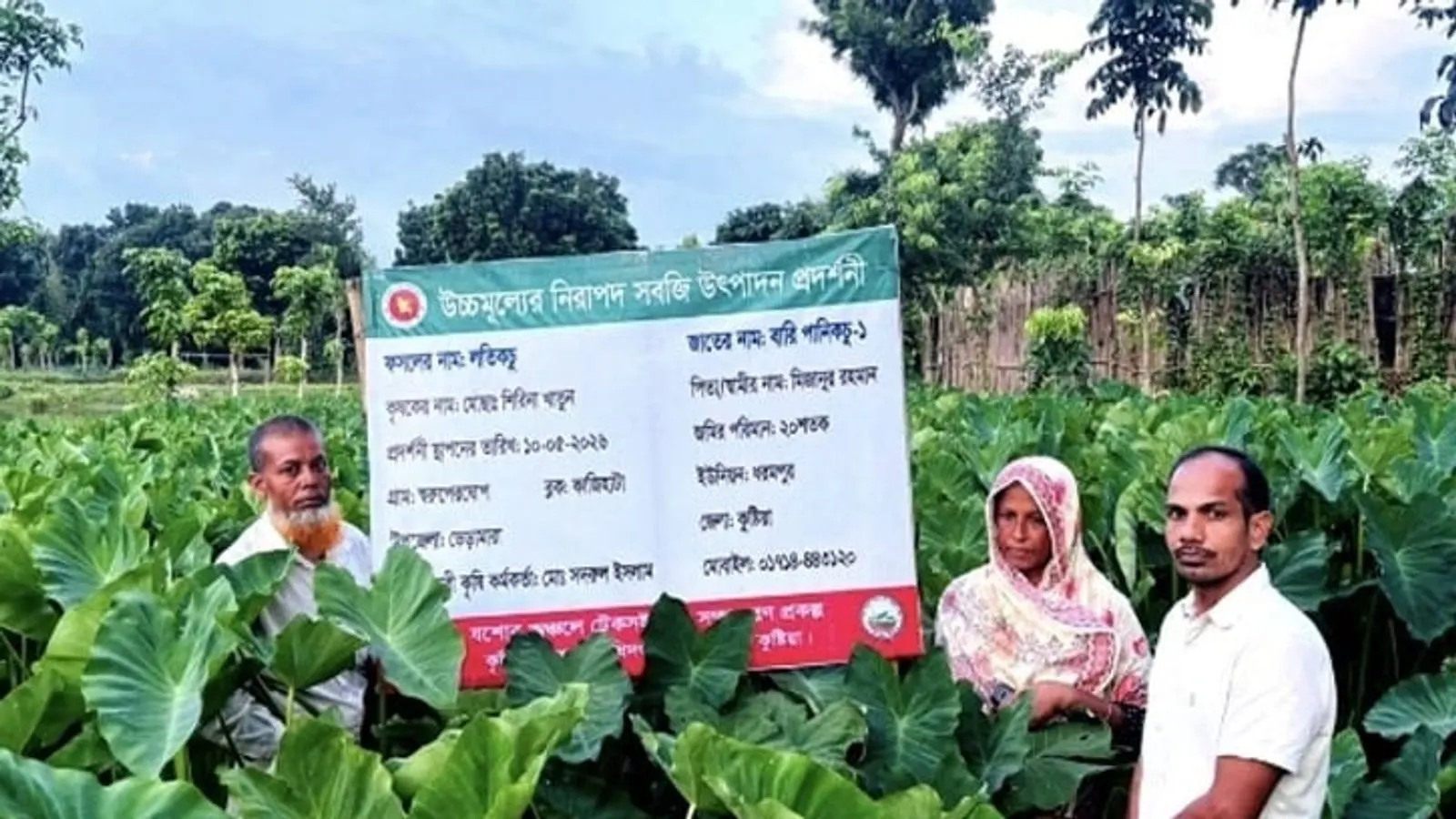
In the current agricultural season starting from May, housewife Shirina Khatun has achieved notable success by cultivating the BARI-Panikachu-1 variety of taro stolons, locally known as lotikachu. A resident of Swaruper Ghop village under Dharampur union in Bheramara upazila of Kushtia, she has dedicated a 20-decimal plot of land to this farming initiative, transforming previously underutilized low-lying land into a productive agricultural venture.
Shirina Khatun's agricultural endeavor received crucial backing from the local administration. The upazila agriculture office and the agricultural department provided her with essential seedlings, fertilizers, and comprehensive training. This institutional support was delivered under the framework of a sustainable agricultural extension project, equipping her with the necessary knowledge and resources to manage the crop effectively from the ground up.
The cultivation process for this specific taro variety yields results within a relatively short timeframe. According to the agricultural timeline provided for the project, the crop reaches maturity and begins producing harvestable yields within 60 to 70 days. This rapid turnaround allows farmers to see the practical results of their labor and investment much faster than many traditional seasonal crops require.
Detailing her ongoing harvest and financial projections, Shirina Khatun shared insights into her current market supply and seasonal outlook. She stated that she is currently supplying one to two maunds of taro stolons to the local market every week. Looking ahead, she expressed optimism about her financial returns, noting that she expects to earn between 100,000 and 150,000 Taka by selling these stolons throughout the entire season.
Building upon this initial profitability, the grower has already formed long-term plans for her agricultural activities. Because the venture has proven to be highly lucrative, she stated that she has a strong intention to expand her operations and cultivate this vegetable on an even larger plot of land in the future, signaling a sustainable path for her household's economic development.
Local agricultural authorities have also highlighted the broader significance of this farming achievement in the region. Sadrul Islam commented on the broader agricultural implications, pointing out that farmers traditionally showed very little interest in low-lying land that tends to get submerged during the rainy season. However, he emphasized that Shirina Khatun has successfully proven that even such damp and water-prone lands can support profitable taro cultivation and play a major role in local economic development.