
Kurigram Women Find Livelihood in Teesta Char Rope Factory
A small-scale colored rope factory established in the remote char area of Ulipur, Kurigram, has provided employment for twelve local women. Despite facing capital shortages, the enterprise produces significant quantities of rope annually.
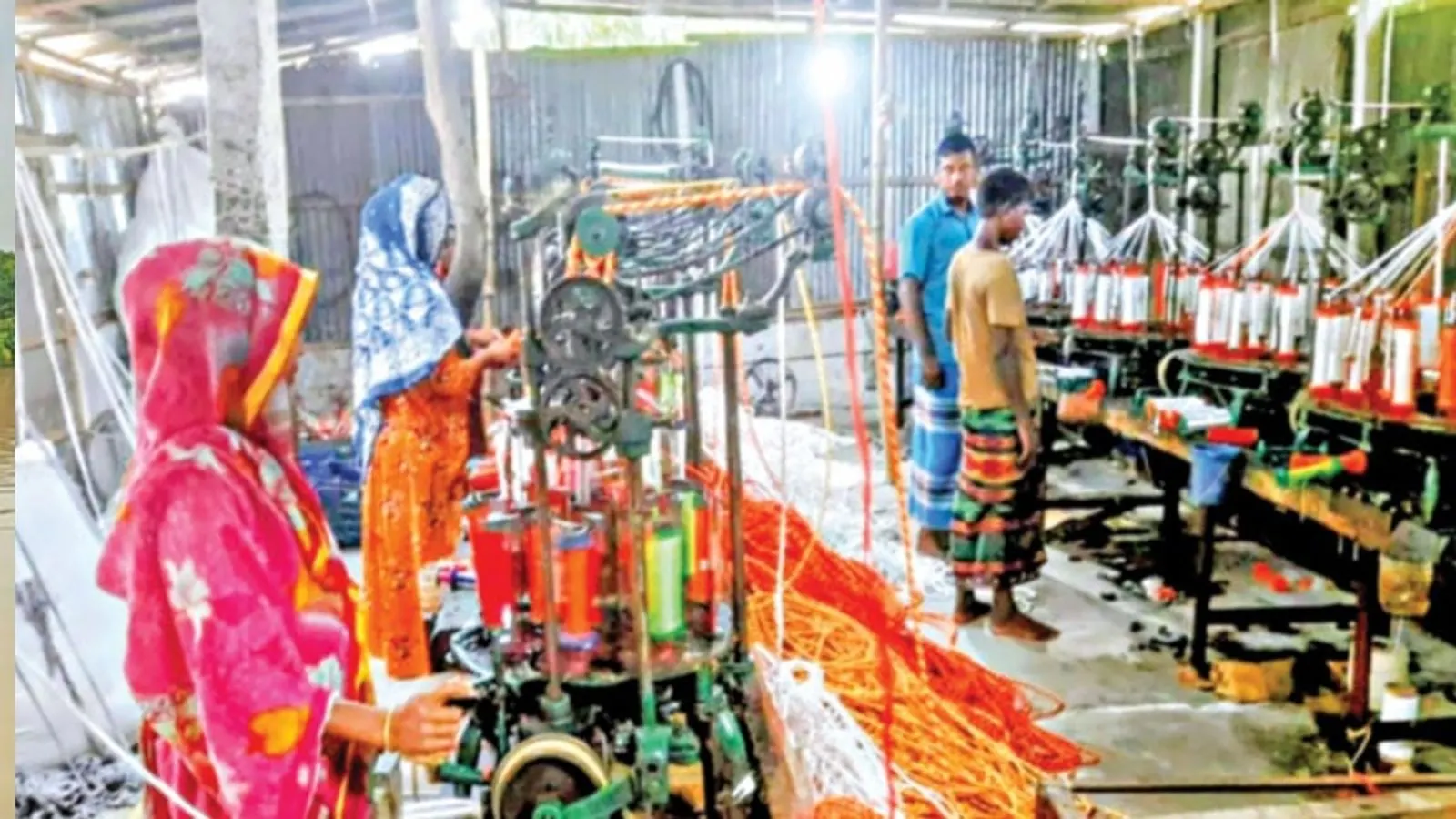
In the remote char area of Char Rajballav village in Ulipur, Kurigram, a small-scale colored rope factory has emerged as a vital source of employment and economic change for local women. Established by local entrepreneurs Nazir Hossain and Nur Alam, the Nazir Hossain Colored Rope Factory operates within the river basin where employment opportunities are typically scarce for residents facing seasonal hardship and river erosion.
At present, twelve female workers are employed at the enterprise, earning a monthly salary of six thousand taka each. Among the workers is Lucky Begum, who highlighted the severe lack of work in the river-eroded region. She noted that previously, she had to work in other people's households just to receive meals and half a seer of rice. By working at the factory instead, she now earns six thousand taka, which allows her to support her household and pay for her children's education.
The manufacturing process relies on fifteen machines that yield substantial production figures. The factory produces forty-five mon of colored rope every month, culminating in a total annual output of five hundred and forty mon. With the finished product priced at two hundred and fifty taka per kilogram, the facility generates a total annual production valued at fifty million taka in manufactured ropes.
Once produced, the colored ropes are distributed across several regional markets, supplying buyers in Kurigram, Rangpur, Gaibandha, and Lalmonirhat. Notwithstanding this commercial reach and production volume, the enterprise operates under financial constraints. Entrepreneurs Nazir Hossain and Nur Alam are currently struggling with funding crises and a persistent shortage of working capital.
To support such small-scale rural industries, financial institutions like BSCIC and the Employment Bank have previously engaged with similar ventures, with records indicating that loans of up to fifty thousand taka have been secured in related contexts. However, the ongoing financial hurdles faced by the Ulipur factory underscore the broader challenges of sustaining rural entrepreneurship and women's employment in vulnerable riverine char communities.