
Glass Use Surges in Bangladesh Interior Design and Real Estate Sectors
Glass is becoming a fundamental element in modern housing and workplaces across Bangladesh. The rapid expansion is driven by a thriving real estate market and growing backward linkage industries.
Glass has emerged as a fundamental architectural and interior design element within modern housing developments and professional workspaces throughout Bangladesh. As the nation's real estate and construction sectors continue to evolve, architects and designers are increasingly incorporating transparent materials to enhance aesthetics, natural lighting, and spatial openness in contemporary buildings.
This architectural shift is strongly supported by a massive network of real estate developers operating across the country. Market data indicates that there are currently more than 2,500 housing construction companies operating nationwide, with 924 active members officially registered under the Real Estate and Housing Association of Bangladesh (REHAB).
Within this expansive construction ecosystem, the glass manufacturing sector has established itself as a vital component. Industry assessments reveal that among the 269 distinct backward linkage sectors supporting the broader real estate industry, the glass manufacturing sector is currently experiencing some of the most rapid growth and commercial demand.
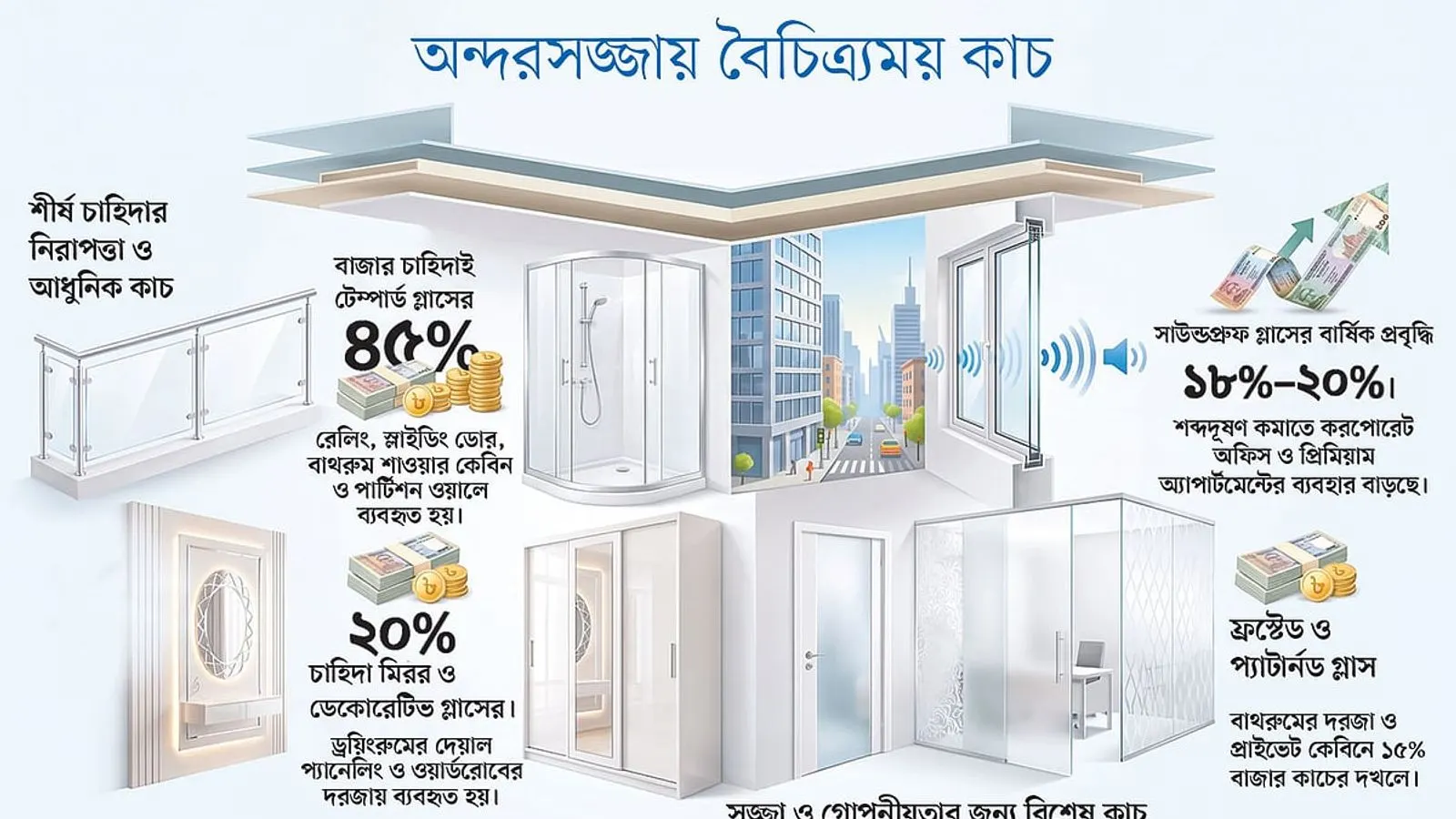
Market consumption patterns highlight a strong preference for specialized, high-performance glass products in modern projects. Safety-rated tempered glass alone currently accounts for approximately 45 percent of the total glass demand in the market, while soundproof and other specialized glass varieties capture roughly 20 percent of the market share.
Technical specifications underscore the functional advantages driving this material shift in Bangladeshi construction. Tempered glass, which is frequently utilized in thicknesses ranging from 10 millimeters to 12 millimeters, proves to be four to five times stronger than standard float glass. Additionally, double-glazed insulated glass is increasingly deployed to successfully reduce external noise pollution by 30 to 40 decibels.
Beyond structural strength and acoustic insulation, these advanced glass solutions deliver notable energy efficiency benefits for building occupants. The utilization of specialized glass configurations helps lower electricity consumption related to air conditioning usage by 15 to 25 percent.
In response to this escalating commercial demand, domestic manufacturers are actively scaling up their operational capabilities. Local enterprises, including Nasir Float Glass alongside other national manufacturers, have initiated concerted efforts to expand their technological capacities by investing in high-tech tempering and insulated glass plants.