
Fish Scale Collectors in Dhaka Face Severe Economic Crisis
Workers in Karwan Bazar, Dhaka, who collect and sell fish scales are struggling to survive as prices drop sharply. Mohammad Zakir Hossain and Salma Begum describe a grueling process with falling returns and rising debt.
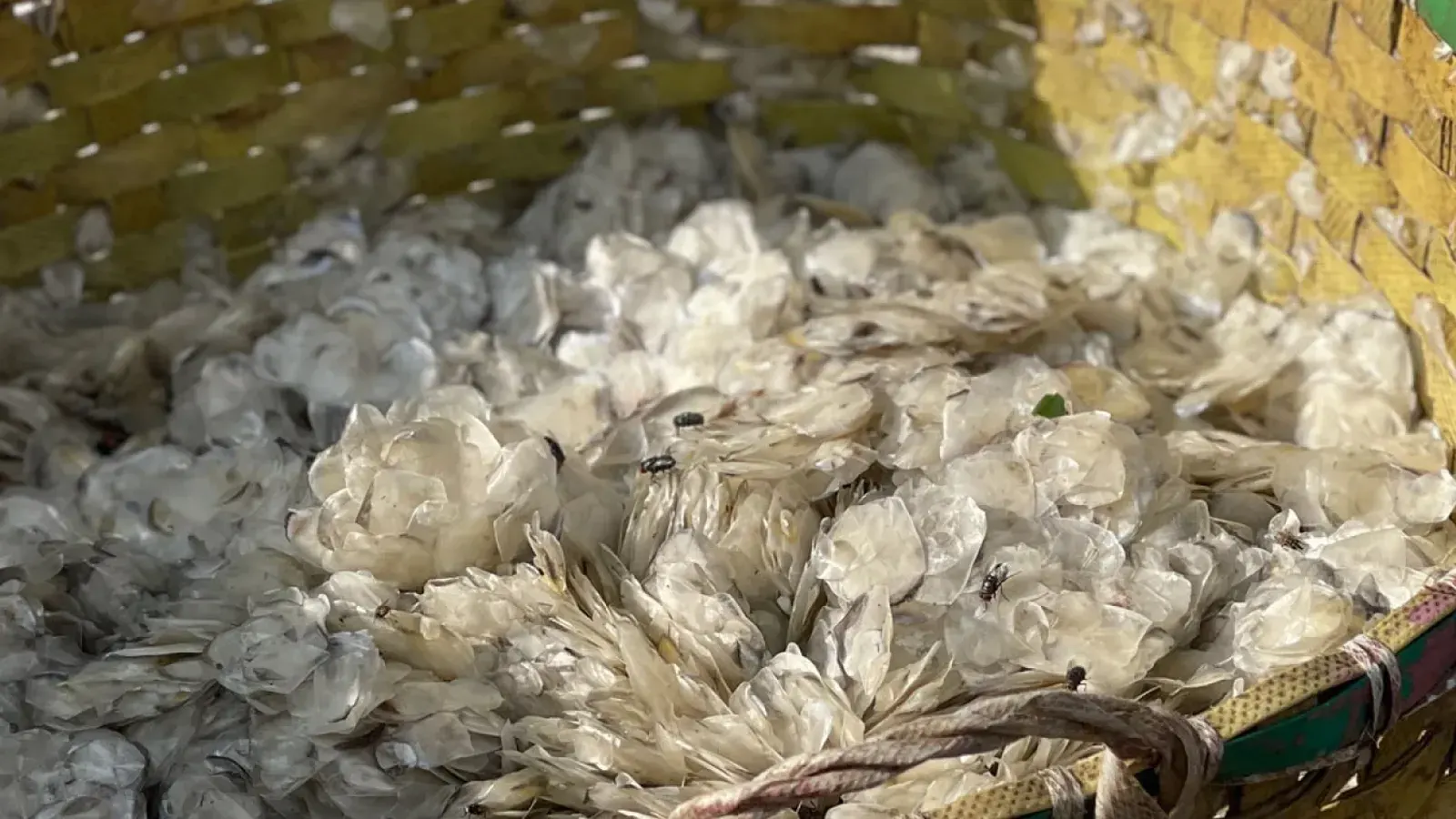
In Karwan Bazar, Dhaka, workers involved in the collection and sale of fish scales are facing a severe livelihood crisis. Mohammad Zakir Hossain, who has been working in this sector for about 17 to 18 years, explains that he cuts fish and preserves the scales, while also purchasing them from others on monthly contracts. Depending on the regular quantity provided, he makes monthly payments ranging from 2,000 to 10,000 taka to suppliers. Salma Begum, who works alongside her husband while cutting fish, notes that she manages to accumulate about 40 to 50 kilograms of scales a month from her own cutting board, though she remarks that getting a little is better than getting nothing at all.
The process of preparing the fish scales for sale involves extensive physical labor. Mohammad Zakir Hossain details that the scales are first weighed with water, washed, and then dried like paddy, requiring constant attention when it rains and taking two to three days of hard work. Salma Begum echoes these difficulties, stating that the exhausting work of cleaning and drying the scales in the sun takes two to four days and has exhausted her life. After all this labor, the scales are sold, but market prices have plummeted dramatically from a previous high of 115 to 120 taka per kilogram down to current rates of 40 to 60 taka per kilogram, which represents about one-third of their former value.
This steep decline in income has severely impacted the workers' ability to cover basic living expenses. Mohammad Zakir Hossain states that his monthly household expenses total 20,25,000 taka, covering house rent, family food, children's education, and medicine, but his daily earnings have dropped from 1,200 to 1,500 taka down to sporadic amounts of 500 to 570 taka or barely enough to buy rice and lentils. He reveals that since August 5, he has accumulated over two lakh taka in debt by exhausting his savings on rent, education, and medicine. Although he previously considered returning to his village home, he notes that he lacks the money to do so and feels he has no place to express his grief or have it heard.
The collected fish scales ultimately undergo an extensive chain of custody before reaching processing companies. Mohammad Zakir Hossain explains that the scales pass through three to four hands before reaching companies that transport them to Chattogram for processing. According to information from the Bangladesh Government's Agricultural Information Service and confirmed facts, these processed scales are used domestically and internationally to manufacture various products including sequins, zari, capsule shells, cosmetics, and poultry and fish feed. Bangladesh primarily exports fish scales to Japan, China, Indonesia, the Philippines, Thailand, South Korea, Hong Kong, and Singapore, with 10 to 12 traders involved in the export sector nationwide.