Decline of Traditional Wooden Dhekis in Rural Bangladesh
Traditional wooden rice husking pedals, once found in nearly every rural household in Bangladesh, have largely vanished due to mechanization. While marginalized women who once relied on the work have shifted to daily wage labor, Dheki-husked rice now commands high prices in urban supershops.
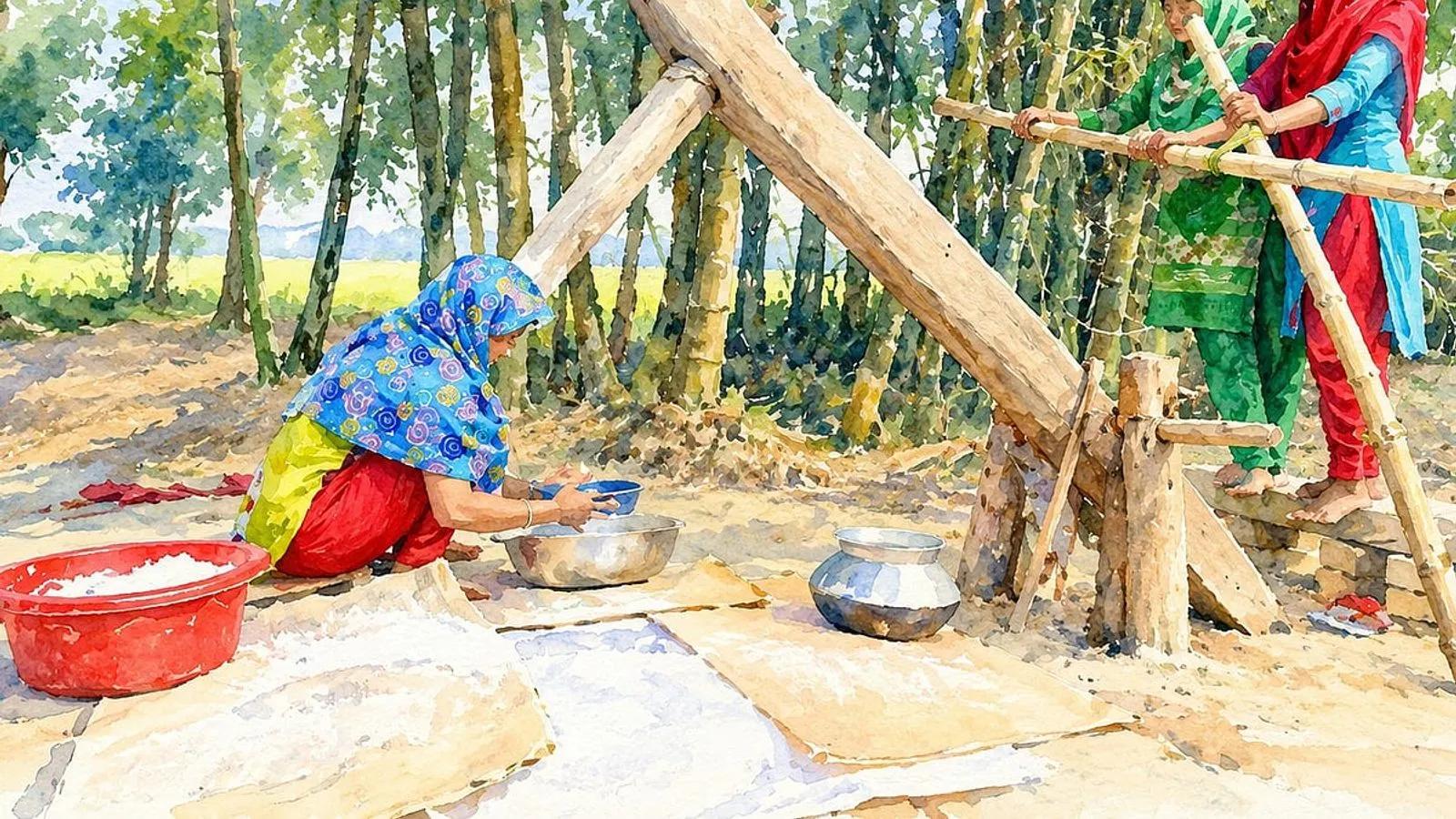
Across the rural landscape of Bangladesh, a profound cultural and economic shift has occurred with the near-total disappearance of the traditional wooden rice husking pedal, historically known as the Dheki. At one time in the nation's history, these manual wooden implements were a ubiquitous fixture found in almost every rural household throughout the country. Families and communities relied heavily on the Dheki for essential daily food preparation tasks, specifically for husking rice and grinding grains into flour.
This centuries-old domestic tradition is famously immortalized in local folklore and song, encapsulating the rhythmic labor of rural life with the familiar refrain: ঢেঁকি ‘ধান ভানি রে, ঢেঁকিতে পার দিয়া...’ However, the sounds of this traditional method have steadily faded from the countryside. The primary driver behind the decline of the traditional wooden Dheki has been the widespread introduction and adoption of modern engine-driven rice mills and mechanized threshing machines across rural communities.
The mechanization of rice processing has had significant socioeconomic consequences for the rural workforce, particularly impacting vulnerable populations. Many marginalized and poor women who previously depended on operating the Dheki as a primary source of income and livelihood have been forced to adapt to the changing economic environment. With manual husking largely obsolete, these women have had to shift their efforts toward other forms of employment, primarily taking on daily wage labor to support themselves and their families.
Despite the widespread displacement of the manual tool in rural areas, the product of the Dheki has paradoxically found a new, specialized market in the country's major urban centers. Today, rice that has been processed using the traditional wooden Dheki is currently packaged and sold at remarkably high prices within urban supershops. This niche market caters specifically to health-conscious consumers and diabetic individuals who actively seek out traditionally processed grains for perceived dietary benefits.