

Bangladesh to Launch Unified Digital Identity Card by 2031
The Information and Communication Technology Division has undertaken an initiative to introduce a new unified digital identity card for all citizens across Bangladesh. The project, titled 'Digital Service Transformation for Access and Resilience (D-STAR)', is scheduled to run from 2026 to 2031 with substantial financial backing.
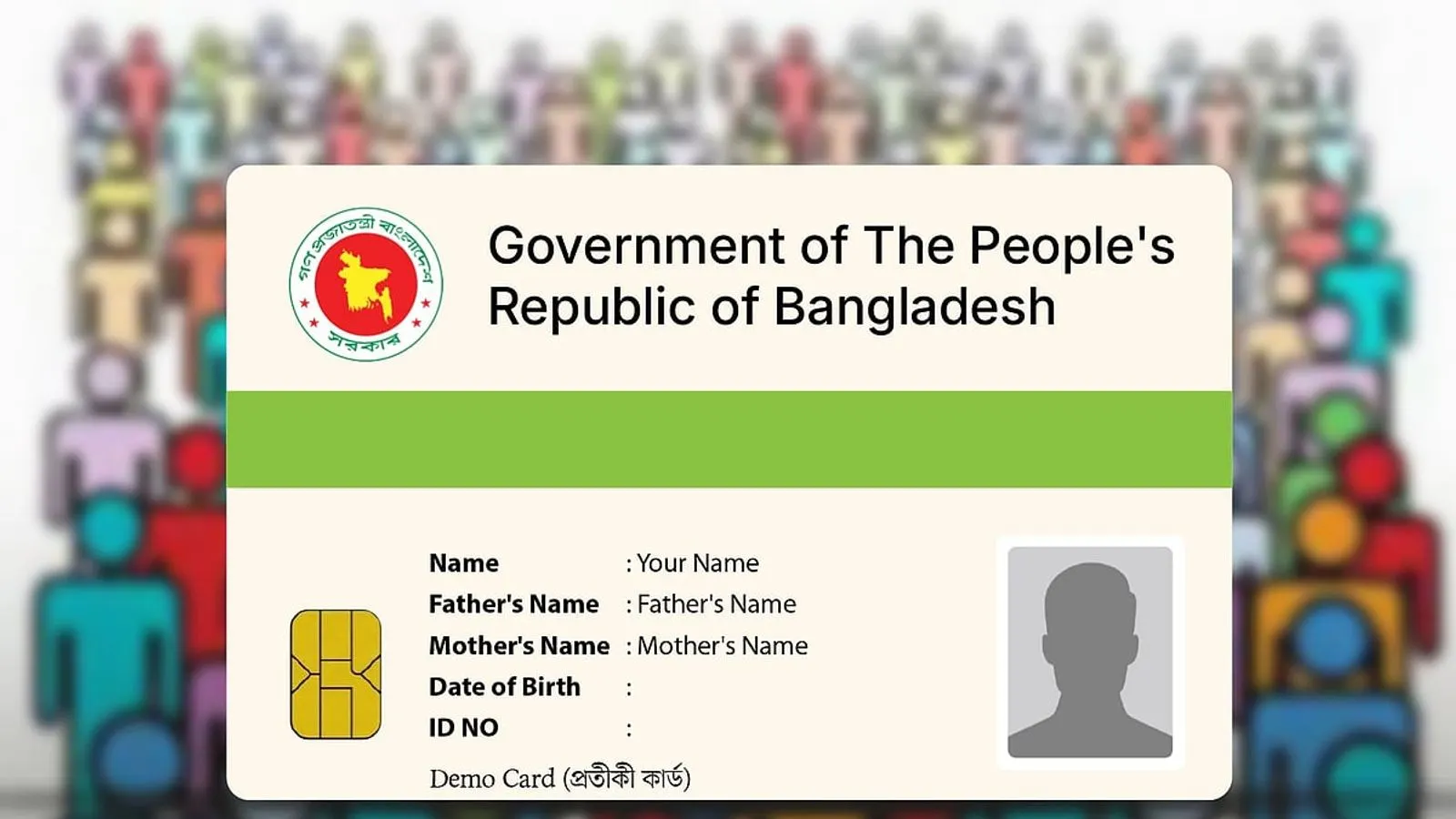
The government of Bangladesh has taken a significant step to provide a single, universal identity document for every citizen through the newly introduced 'Unified Digital Identity' system. Led by the Information and Communication Technology Division, this comprehensive undertaking aims to streamline national identification processes across the country through a newly formulated project.
The initiative is officially titled the 'Digital Service Transformation for Access and Resilience (D-STAR)' project. Implementation responsibilities have been assigned to the Bangladesh Computer Council. The scheduled timeframe for the execution and completion of this ambitious national undertaking spans from the years 2026 to 2031.
Financial allocations for the D-STAR project have been meticulously outlined, with a total estimated expenditure reaching 9,193 crore takas. Of this substantial budget, the government itself will provide 7,663 crore takas, while the remaining funding of 1,530 crore takas will be sourced from loans provided by the World Bank, alongside involvement from the Planning Commission and other entities like Prothom Alo, the Bangladesh Nationalist Party (BNP), and the Institute of Information Technology at the University of Dhaka.
A breakdown of the project costs reveals specific financial figures for various components. The total expenditure for production, printing, and biometric information collection and distribution is projected at 7,380 crore takas. Within these operations, the individual cost for production, printing, distribution, and supply for each card will total 369 takas, with distribution and supply expenses alone calculated at 1 dollar, equivalent to 123 takas. Furthermore, creating family cards and collecting associated data will require 1,906 crore takas, while issuing dedicated farmer cards will incur a cost of 681 crore takas.
Mamunur Rashid Bhuiyan, alongside Rehan Asif Asad and B.M. Mainul Hossain, addressed the rationale behind the new system, noting that although the country currently has multiple types of cards, there remains a significant lack of coordination. Highlighting existing discrepancies where individuals might possess two birth registration cards or two passports, the initiative will establish a permanent and singular identity document. Under this new system, even a newly born child will receive this universal card, rendering any other identification cards completely unnecessary in the future.